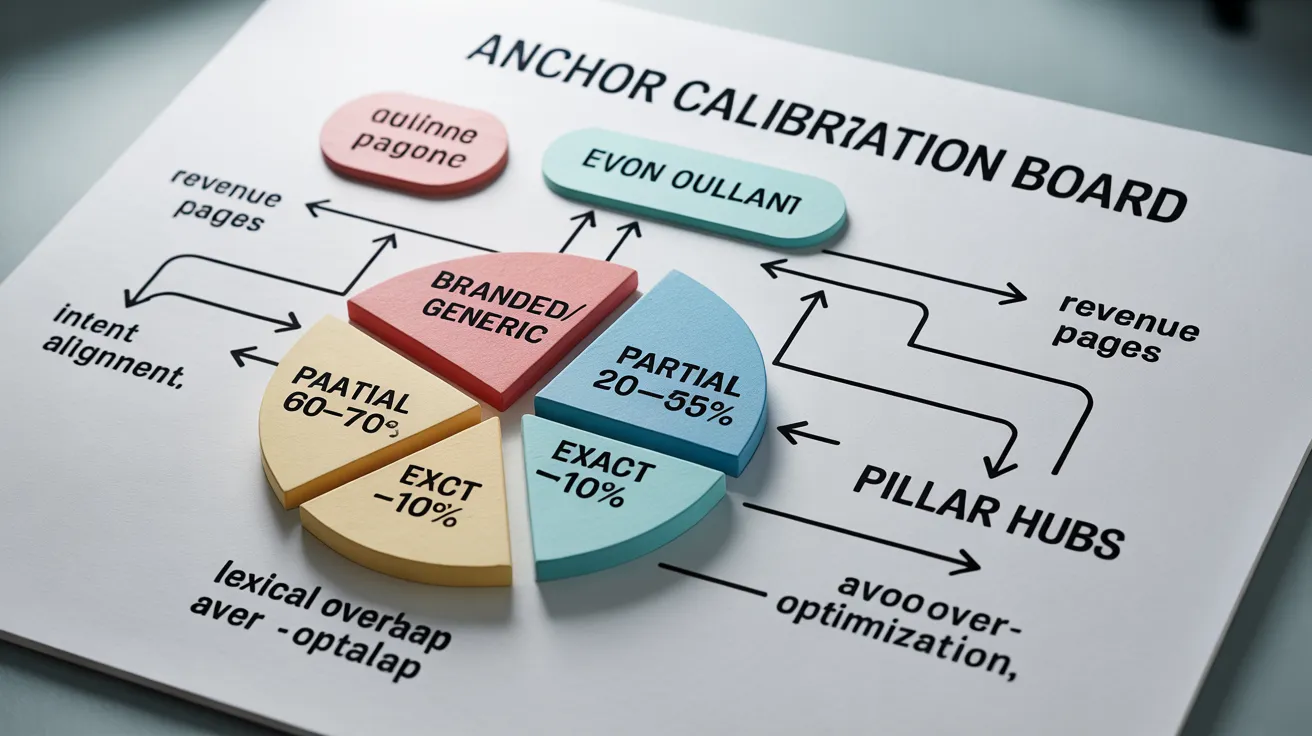
Build high-quality backlinks with LinkDaddy’s team to lift rankings, enhance indexation, and drive relevant traffic. You’ll get legitimate outreach, contextually-appropriate placements, and diversified referring domains compared against SERP leaders. We evaluate prospects by DR/DA, topical fit, traffic value, and outbound link hygiene, then calibrate anchors to match intent. Track impressions, CTR, average position, link velocity, and cost per acquired link associated with assisted conversions for ROI clarity. See how our metric-focused process builds authority and defends against update shocks.
Essential Highlights
Why Targeted Backlinks Continue to Deliver Impact
Even as algorithms advance, strategic backlinks continue to be one of the most robust ranking signals, connected to higher organic traffic, faster indexation, and increased keyword visibility. You win when links strongly correspond to search intent, topical authority, and anchor relevance. Data shows pages with diverse, high-authority referring domains generate more impressions, longer dwell times, and more consistent rankings. Concentrate on referral diversity to decrease volatility and protect from update shocks.
Refine targets by mapping keywords to pages, then calibrate anchors to match context and eliminate over-optimization. Benchmark link velocity, authority mix, and topical clusters against SERP leaders. Track leading indicators: crawl frequency, new keyword discovery, and click-through improvement on target pages. When your link graph mirrors user demand and intent, you'll accelerate indexation, compound authority, and capture progressive, defensible market share.
White-Hat Outreach That Scales Safely
Although algorithms discipline manipulative link schemes, you can grow white-hat outreach by matching rigorous prospect qualification with consistent, value-led pitches. You begin with filters: DR/DA thresholds, topical alignment, organic traffic growth, and outbound link ratios. You focus on sites with active audiences and clean backlink profiles to preserve ethical linkbuilding intact.
Leverage data-backed, personalized angles. Mention a target's top-performing content, visibility opportunities, or broken links, then offer an piece of content that addresses a reader issue. Build efficient outreach with modular templates, variable fields, and split-tested subject lines. Analyze response rate, approval rate, link placement velocity, and link acquisition cost to refine.
Streamline list building and scheduling without automating relationships. Follow up politely, provide distinctive value, and document learnings. That's scalable outreach that safeguards rankings and brand equity.
Targeted Niche Backlink Portfolios Built on Data-Driven Insights
You map your niche with hard data to pinpoint the most valuable keywords, topics, and publishers your audience actually engages with. Then you rank placements by contextual authority signals—content relevance, semantic proximity, and link neighborhood quality—to enhance trustworthy rankings. Finally, you leverage competitive gap insights to acquire links your adversaries missed and bridge authority shortfalls fast.
Information-Based Niche Assessment
Via comprehensive data collection and clustering, Data-Driven Niche Mapping creates a niche-relevant link profile that amplifies authority and rankings. You’ll identify profitable subtopics, map SERP entities, and target publishers whose audiences match your buyers. Utilizing audience segmentation and keyword clustering, you’ll match anchor text with query intent, eliminate irrelevant prospects, and prioritize pages that deliver commercial outcomes.
We assess competitors' backlink networks, extract common referring domains, and rank link gaps by topical depth and traffic value. Then we structure outreach by domain quality, link placement type, and internal propagation potential to optimize equity flow. The end result: more efficient link velocity, elevated topical coverage, and measurable lifts in impressions, CTR, and assisted conversions. You'll spend less, build more intelligently, and scale authority directly where it generates revenue.
Contextual Authority Signals
Data-driven niche mapping lays the groundwork; contextual authority signals convert it into compounding trust. You establish authority when each backlink aligns with semantic relevance, anchor intent, and topical depth. We evaluate every prospect by entity match, co-citation frequency, outbound link hygiene, and historical performance, then fine-tune anchors to reflect natural language while reinforcing core themes. You’ll see link velocity aligned with your baseline, ensuring stability and trust signals that scale.
Our approach prioritizes context over pure DA: authority-crafted pages, theme-based hubs, and content placements supported by supporting entities. Each placement targets a specific keyword cluster and landing page, strengthening topical coverage and decreasing noise. The result: more robust crawl paths, greater intent alignment, and long-term ranking increases backed by proven data, not assumptions.
Competition Gap Overview
While competitors pursue generic DA, competitive gap insights identify the specific link types, anchors, and referring domains you lack for your target SERPs. You evaluate each competitor backlink by URL, anchor variance, topical category, and authority threshold, then quantify which patterns correlate with rankings. With opportunity mapping, you focus on the highest-impact domains and placements to close the gap fast.
You'll discover which resource pages, industry blogs, and comparison guides generate traction, plus the anchor ratios that maintain your profile natural. We align keyword clusters to page intent, then construct niche-relevant links that support your topical map and internal linking. Outcome: quicker indexation, more robust query coverage, and sustainable gains. End the uncertainty. Mirror what works, exchange what's weak, and outrank with precision-built links.
Content Materials That Generate High-Authority Citations
You gain high-authority mentions by releasing data-driven industry studies that journalists and analysts can cite. Change your proprietary insights into visualizable assets—charts, maps, and benchmarks structured around “original data,” “industry report,” and “statistics” keywords. The result: natural citations, steady referral traffic, and scalable backlink acquisition.
Information-Driven Market Analysis
Because original research generates trust and links, data-driven industry studies serve as your highest-ROI backlink asset. You measure problems your market is concerned with, then publish research-driven findings that journalists, analysts, and niche bloggers reference.
Open with clear hypotheses aligned with audience segmentation. Determine cohorts, sample sizes, and confidence levels. Collect primary data from polling, product telemetry, or verified panels. Standardize, de-bias, and benchmark against available datasets. Add trend forecasting to illustrate where the sector’s heading over the next quarters and years.
Bundle results with an executive summary, methodology, and quotable stats. Propose exclusive angles to premier outlets and trade editors. Map each stat to search demand and anchor pages. You’ll acquire contextual, high-authority backlinks, enhance topical authority, and drive qualified referral traffic.
Visual Private Intelligence
How do you turn proprietary data into link-magnet assets that editors won't pass up? You wrap your insights into visual stories that respond to urgent questions fast. Develop proprietary dashboards that surface benchmarks by cohort, region, or segment. Layer trendlines, deltas, and percentiles so journalists can cite bite-sized stats with confidence. Add predictive visualizations that anticipate outcomes under different scenarios; editors appreciate forward-looking numbers that lower the risk of their coverage.
Prioritize clarity: one chart, one takeaway, one quotable stat. Tie each graphic to high-intent keywords and embed schema for rich results. Distribute downloadable charts, API snippets, and CSVs to boost reuse and attribution. Update quarterly to capture new narratives. Monitor pickup with UTM tags, then pitch targeted journalists with headline-ready insights and embeddable assets.
Transparent Analytics and Performance Measurements
While link acquisition often steals the spotlight, transparent reporting and performance metrics prove whether your backlink strategy drives ROI. You must have performance dashboards that reveal anchor text ratios, referring domain quality, link velocity, and indexation status—updated in real time. Track keyword ranking improvements, organic sessions, assisted conversions, and revenue impact by page.
We employ attribution modeling to connect each backlink to measurable performance metrics. Multi-touch models uncover how editorial links accelerate mid-funnel engagement, while position-weighted models pinpoint high-intent pages that close. You’ll view cost per acquired link, cost per incremental session, and cost per assisted conversion, so budget flows to what works.
Produce pristine datasets, schedule management summaries, and benchmark against baselines. With visible metrics, you focus on expandable tactics, reduce waste, and compound authority faster.
Custom Campaigns for Brands at All Stages
From startup to industry dominance, adapt backlink campaigns to more info your position to maximize ROI. If you’re new, focus on fast indexation, foundational citations, and niche edits focusing on low-competition keywords to capture early SERP visibility. Leverage audience segmentation to match anchor text and placements with intent cohorts—awareness, consideration, and transactional.
For brands in the growth stage, move toward authority stacking: digital PR, high-DR guest posts, and contextual links on pages with organic traffic. Analyze keyword difficulty vs. conversion rate to allocate spend efficiently. Implement budget scalability by ramping link velocity only when rankings and assisted conversions trend upward.
Enterprise? Pursue category dominance through topical clusters, entity-building links, and publisher partnerships. Rate opportunities through relevancy, traffic potential, and E-E-A-T signals. Each campaign features measurable milestones: rank lift, CTR, attributed revenue.
Building Cumulative SEO Results and Sustainable Growth
Such staged campaigns create the baseline for momentum; now you turn wins into multiplying SEO benefits that decrease CAC and increase LTV. You operationalize growth by reinforcing high-CTR pages, obtaining topical backlinks, and interlinking to transfer PageRank into revenue pages. Emphasize Long-lasting content that captures stable demand, refresh it quarterly, and grow clusters based on keyword gaps and SERP intent.
You build Referral loops by converting ranking assets into lead magnets, driving shares, and obtaining brand mentions that fuel more links. Monitor leading indicators: impressions, click-through rate, average position, and referring domains; tie them to lagging metrics: qualified pipeline, conversion rate, and payback period. With strategic link velocity, content refresh cadence, and schema enhancements, you’ll create durable authority, reduce paid spend reliance, and scale predictable organic growth.
Most Asked Questions
How Does Our Pricing Compare to Typical Digital PR or Guest Posting Agencies?
You'll generally pay lower than most guest posting or digital PR agencies, particularly when you factor transparent pricing and value metrics. Anticipate per-campaign flat rates versus per-placement markups or high retainers. You get cost-per-link clarity, quality tiers for domains, and consistent turnaround times. Traditional agencies typically charge $500–$1,500 per placement; you'll see actual costs closer to mid-range, with trackable results: DR and DA thresholds, traffic benchmarks, and anchor text diversity—all measured against ROI and link acquisition speed.
Which Business Areas or Niches Does Linkdaddy Avoid or Decline?
LinkDaddy typically avoids high-risk niches: adult content, gambling affiliates, illegal substances, copyright goods, payday loans, and hate or extremist material. You'll find stricter vetting for CBD, copyright, medical claims, and supplements due to compliance and publisher policies. This exclusion reduces domain risk, boosts approval rates, and protects link equity. Look for higher placement consistency, lower spam scores, and superior long-term SERP performance by targeting compliant industries like SaaS, eCommerce, local services, and B2B.
Do Campaigns Accommodate Non-English or Multilingual Backlink Approaches?
Absolutely. You can execute campaigns that accommodate multilingual or non-English backlink strategies. You’ll carry out multilingual outreach to publishers in identified regions, categorize keywords by language, and deploy localized anchor text variations matching native search intent. You’ll evaluate domain metrics (DR/UR/traffic) by locale, maintain geo-relevant topical relevance, and track outcomes via language-segmented rankings, CTR, and referral traffic. This strategy increases international visibility, strengthens local SERP standings, and drives qualified, region-specific organic growth.
How Are Harmful Backlinks Detected and Disavowed After a Campaign?
Like a Geiger counter for links, you identify toxic backlinks by scanning for toxic signals: spam TLDs, irrelevant anchors, high outbound ratios, sudden velocity spikes, and low Trust/Authority scores. You confirm via Search Console, Ahrefs/Majestic metrics, and manual checks. You initiate link removal first—email outreach, DMCA/spam reports—then file a detailed disavow file (domains/URLs) in Search Console. You track indexation, rankings, and toxicity scores on a weekly basis to confirm recovery and preserve outcomes.
What is the Minimum Contractual Period or Engagement Requirement?
You're not tied to a long minimum contract length; the minimum duration is on a month-by-month basis under clear engagement terms. You can adjust or suspend based on performance KPIs like referring domains, DR growth, and organic traffic deltas. We outline deliverables, cadence, and reporting frequency upfront, then track CAC-to-ROI ratios and link velocity to validate impact. If targets aren't achieved, you modify scope without penalties, keeping commitments flexible and outcomes measurable.
To Conclude
You want measurable SEO wins, not guesses. With LinkDaddy, you'll establish white-hat, niche-relevant backlinks that drive growth. Data shows pages in the top results have 3.8x more backlinks—so you'll focus on authority domains, optimize anchor text, and deploy content assets that earn mentions. You'll receive transparent reports, clear KPIs, and custom campaigns for every stage. The outcome: stronger rankings, higher organic traffic, and defensible authority—all powered by scalable outreach, intelligent link profiles, and performance-driven SEO.